
I. Förberedelser före installation
Verktygs- och materiallista
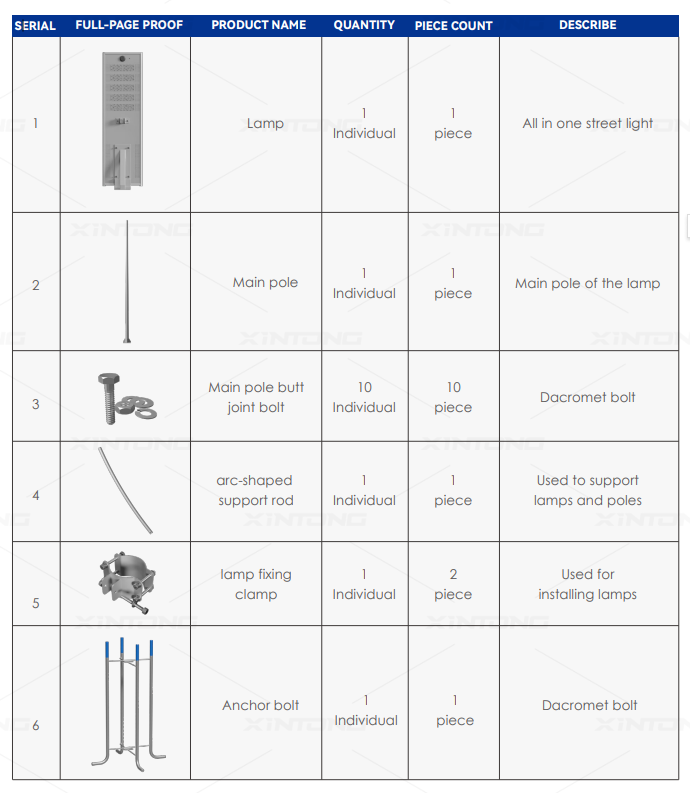
1. Gatubelysningskomponenter: Lyktstolpar (välj lämpliga specifikationer beroende på den avsedda höjden, vanligtvis gjorda av stål), lampor (LED-lampor är vanliga, bestäm effekt och belysningsvinkel), lampskärmar och lampfötter.
II. Grundläggning
Grävning av grundgropen
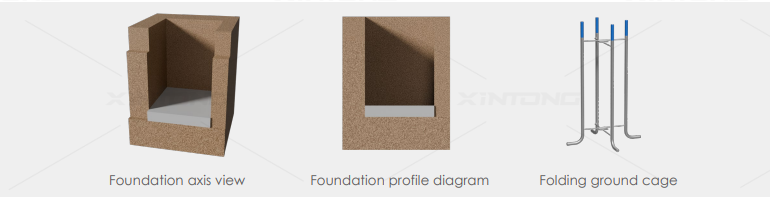
1. Bestäm storleken på grundgropen utifrån lyktstolpens höjd och vikt. Generellt sett, för 8-12 meter höga lyktstolpar för huvudgator, är grundgropens djup 1,5-2 meter, och sidlängden på gropens botten är 1-1,5 meter (kvadratisk grundgrop). Använd en spade eller en liten grävmaskin för att säkerställa att gropens väggar är vertikala och gropens botten är plan. Om underjordiska rörledningar påträffas under grävningsprocessen, stoppa arbetet omedelbart, kontakta relevanta avdelningar och vidta skydds- eller förebyggande åtgärder.
2. Lägg en 10–15 centimeter tjock grus- eller sandkudde i botten av gropen och komprimera den med en plattvibrator för att öka fundamentets bärförmåga.
Stålstångsbindning och montering av förankringsbult
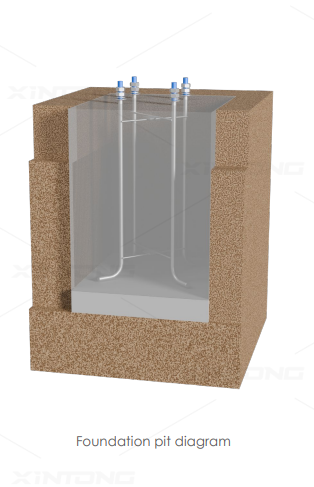
1. Bind fast stålstångsramverket i gropen enligt konstruktionskraven. Stålstängerna ska vara jämnt fördelade och skärningspunkterna ska vara ordentligt förbundna med järntråd för att förbättra fundamentets integritet och stabilitet.
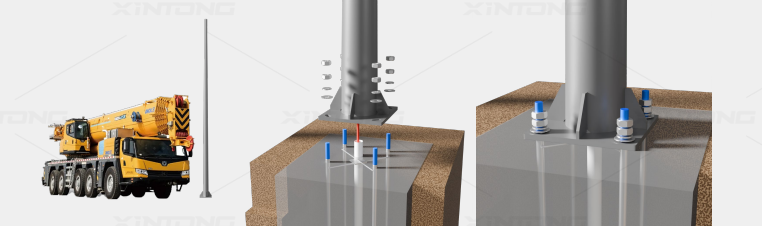
2. Fäst förankringsbultarna på en anpassad bultpositioneringsmall, justera bultavståndet och vertikaliteten så att de exakt matchar bulthålen på lampstolpens bottenfläns. Längden på förankringsbultarna som är exponerade över marken bestäms enligt lampstolpens installationskrav, vanligtvis 10–15 centimeter. Linda in den exponerade delen med plastfilm för att förhindra att gängorna kontamineras under betonggjutningen. Svetsa sedan samman positioneringsmallen och stålstångsramen för att säkerställa att förankringsbultarnas position förblir oförändrad under gjutningen.
Formsättning och betonggjutning
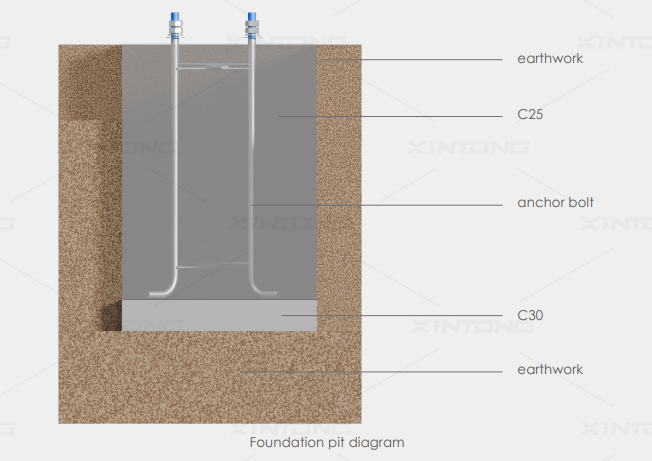
1. Res upp grundformen. Formen kan vara tillverkad av stål eller trä. Den måste vara tätt skarvad och stadigt stöttad för att förhindra läckage och deformation av injekteringsmedel under betonggjutning. Formen är något större än grundgropens storlek för enkel konstruktion.
2. Blanda betongen enligt betongblandningsförhållandet (till exempel cement: sand: grus = 1:2:3), se till att blandningen är jämn och att sättmåttet uppfyller kraven. Häll betongen långsamt i grundgropen och använd samtidigt en vibrerande stång för att vibrera den för att få ut luftbubblor i betongen och göra betongen kompakt. Kontrollera förankringsbultarnas position när som helst under gjutningsprocessen och justera dem vid avvikelser.
3. När betongen är gjuten till cirka 5–10 centimeter från marken, använd ett vattenpass för att jämna ut fundamentets ovansida för att säkerställa att fundamentet är horisontellt. När betongen börjar härda, ytbehandla fundamentets yta för att göra den jämn och förhindra vattenansamling.
III. Lampinstallation
Lampmontering
1. Montera lampans komponenter på marken, till exempel att montera lampskärmen, fästa lampfoten och ansluta ljuskällan. Kontrollera om lampans utseende är skadat och om komponenterna är ordentligt anslutna.
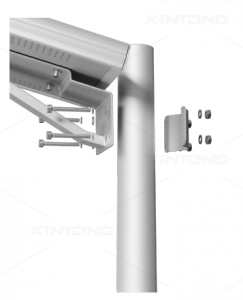
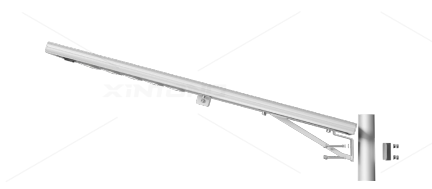
2. Montera klämman på lyktstolpen, sätt i bultarna och dra sedan åt gradvis diagonalt med måttlig kraft för att förhindra skador på integrerade komponenter;
Montera lampan på lampstolpen
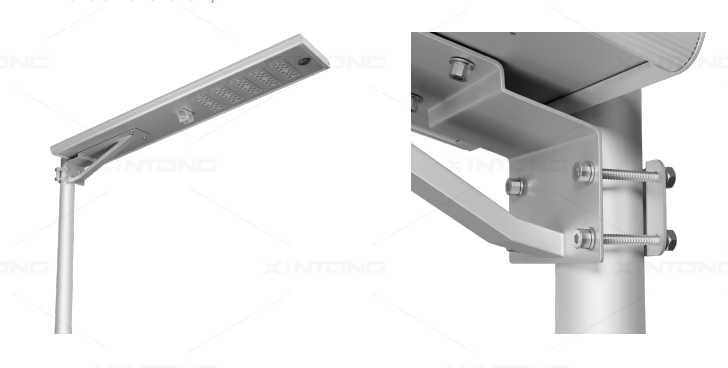
1. Skaka försiktigt klämman för att bekräfta att den inte är lös, kontrollera avståndet från gatubelysningens integrerade kretsar och utrustning och säkerställ att installationen är ordentligt fast utan att störa den övergripande funktionen.
IV. Elektrisk anslutning
Ledningar i lyktstolpen
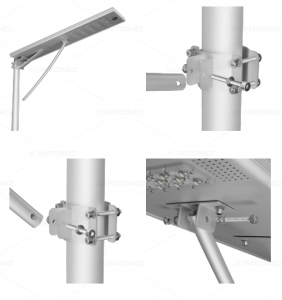
1. Rikta in dig efter stolpens krökning, montera det bågformade stödet i den förinställda positionen på stolpen och kalibrera dess passform med klämman. Sätt i bultar för att fixera stödet och klämman, dra åt diagonalt för att förhindra att det lossnar och montera den integrerade gatubelysningsstrukturen. Skaka försiktigt för att kontrollera att det inte förskjuts, se till att stödet är stabilt och att det inte påverkar gatubelysningens integrerade funktioner.
V. Montering av lampstolpe
Lyftning av lampstolpe
1. Välj en kran med lämplig tonnage. Parkera kranen på ett plant och fast underlag för att säkerställa att kranens stödben är stabila och att arbetsradien uppfyller kraven för lyft av lyktstolpen. Kontrollera kranbommen, kroken, linorna och andra komponenter för att säkerställa att de är säkra och tillförlitliga.
2. Knyt fast lyftlinorna på en lämplig plats på toppen av lyktstolpen. Linorna ska vara jämnt fördelade och ha tillräcklig styrka för att förhindra att lyktstolpen lutar under lyftning. Lyft långsamt kranbommen för att lyfta lyktstolpen till en viss höjd och flytta kranen för att rikta in lyktstolpens undersida med förankringsbultarna i grundgropen.
3. Sänk ner lampstolpen för att passa in bulthålen på lampstolpens bottenfläns med förankringsbultarna och dra först åt muttrarna, men dra inte åt dem helt för efterföljande justering av lampstolpens vertikala position.
Justering av lampstolpens vertikala läge
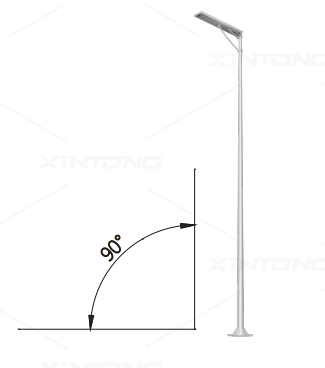
Mät lampstolpens vertikalitet från flera riktningar (minst två ömsesidigt vinkelräta riktningar) för att säkerställa att lampstolpen är vinkelrät mot marken i alla riktningar. När justeringen är klar, dra åt muttrarna enligt angivet vridmoment (till exempel är vridmomentet för bultar av klass 8,8 200–250 Nm) för att fixera lampstolpen.
VI. Idrifttagning och underhåll
Idrifttagning
1. När installationen av gatlyktorna är klar, kontrollera om alla elanslutningar är korrekta och fasta, om lamporna är stabilt installerade och om lampstolparnas vertikala placering uppfyller kraven.
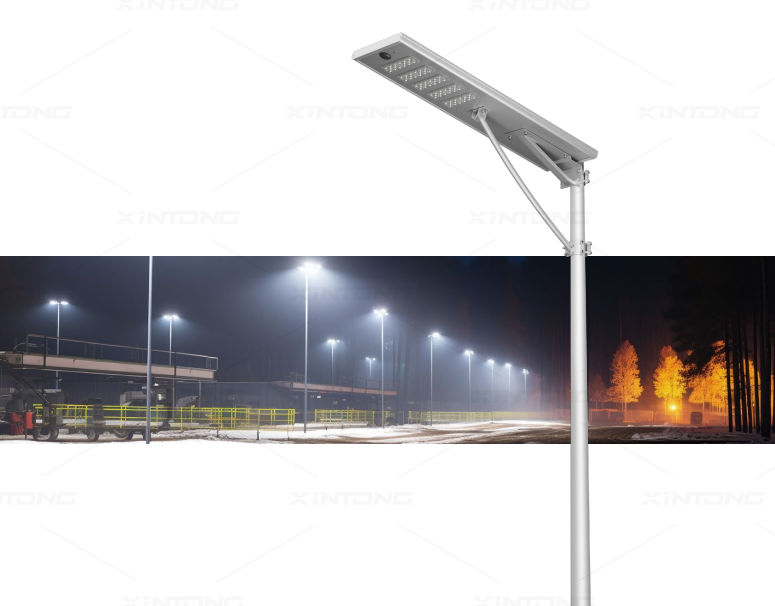
2. Stäng brytaren i fördelningsboxen för att starta gatlyktorna. Kontrollera om lamporna lyser normalt och observera om lampornas ljusstyrka och färg är jämn. Om det finns lampor som inte lyser eller har onormal ljusavgivning, felsök felen i tid. Möjliga orsaker inkluderar lampskador, lösa kabelanslutningar och trasiga säkringar.
3. Kontrollera gatlyktornas styrsystem, till exempel om den tidsstyrda strömbrytaren tänder och släcker gatlyktorna korrekt enligt den inställda tiden, och om den ljuskänsliga styrenheten automatiskt kan styra gatlyktornas tändning och släckning beroende på omgivningsljuset. Om det finns problem, justera styrsystemets parametrar eller byt ut de felaktiga komponenterna.
Publiceringstid: 24 oktober 2025


